The Falmouth Visitor Guide
Pendennis Castle, Trebah and more: the attractions, the days out and how to plan your visit.
Pendennis Castle, Trebah and more: the attractions, the days out and how to plan your visit.
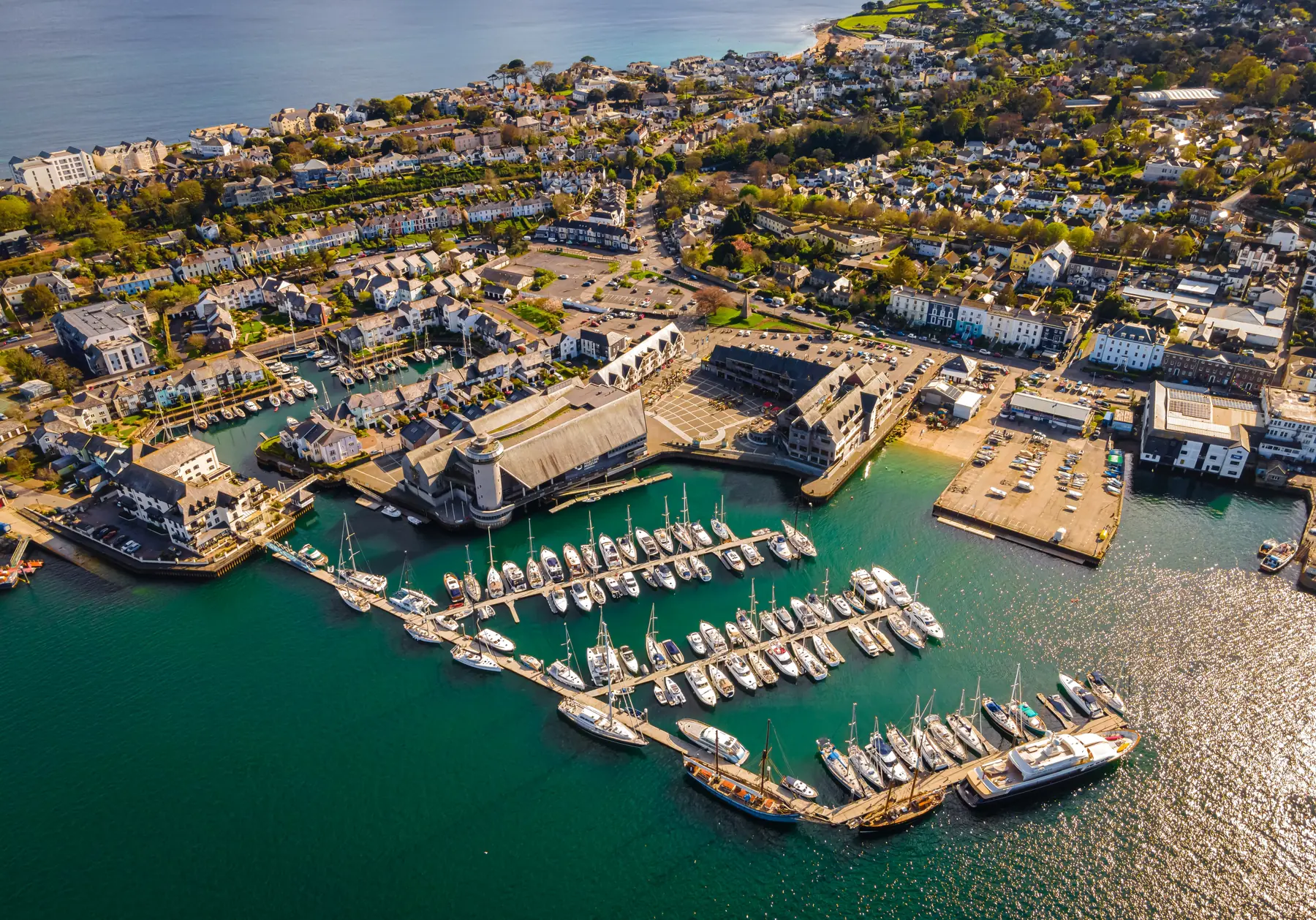
Falmouth is a working harbour town on the south coast of Cornwall, at the mouth of the River Fal, and the Carrick Roads behind it is claimed to be the third largest natural harbour in the world. The 2021 census counted 25,729 people here, an 18 per cent rise on 2011, and the town still earns part of its living on the water — ship repair and superyacht building at Pendennis Shipyard in the docks — alongside a university that has reshaped it over the last two decades. The main sights sit close together; the walking day published here covers 2.7 km. It suits a visitor who wants a town rather than one headline sight, and who does not mind hills.
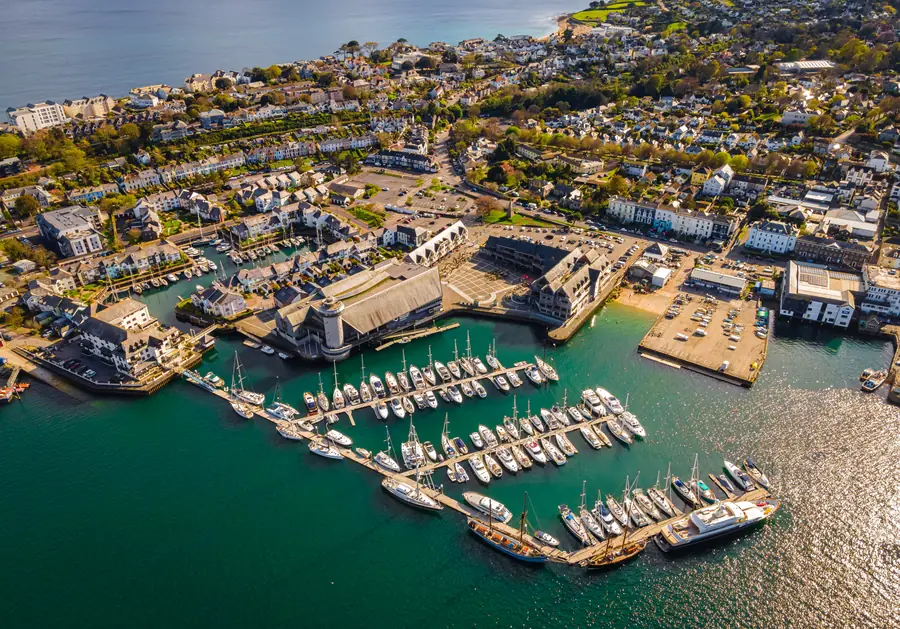
Falmouth faces two ways. The north-east side is the harbour: Greenbank, the Prince of Wales Pier where the ferries go from, Custom House Quay and the docks beyond. The south side is Falmouth Bay and the beaches. The Pendennis headland separates them, and almost everything a visitor wants strings along the ground between the Moor and Falmouth Docks, which is the flat part. Away from that strip the town climbs hard, Killigrew Street and Trelawney Road most of all, and Jacob’s Ladder, 111 steps built in 1840, goes up from the Moor to Summers Hill.
The Moor is the inland hub, with the bus stands and, above the library in the Municipal Buildings, Falmouth Art Gallery, strong on Cornish painting and automata. From there the main shopping street runs in a straight line towards the water, with a pub roughly every 50 metres and more than 15 bars inside a square mile. On the harbour at Discovery Quay is the National Maritime Museum Cornwall, oak-clad, built on a former shipyard in 2003. It divides visitors, 4.3 from 2,837 Google reviews: one in July 2026 complained of “quite a lot of exhibits not really relevant to our national maritime history”, while another that same month called it “small but packed with amazing history”.
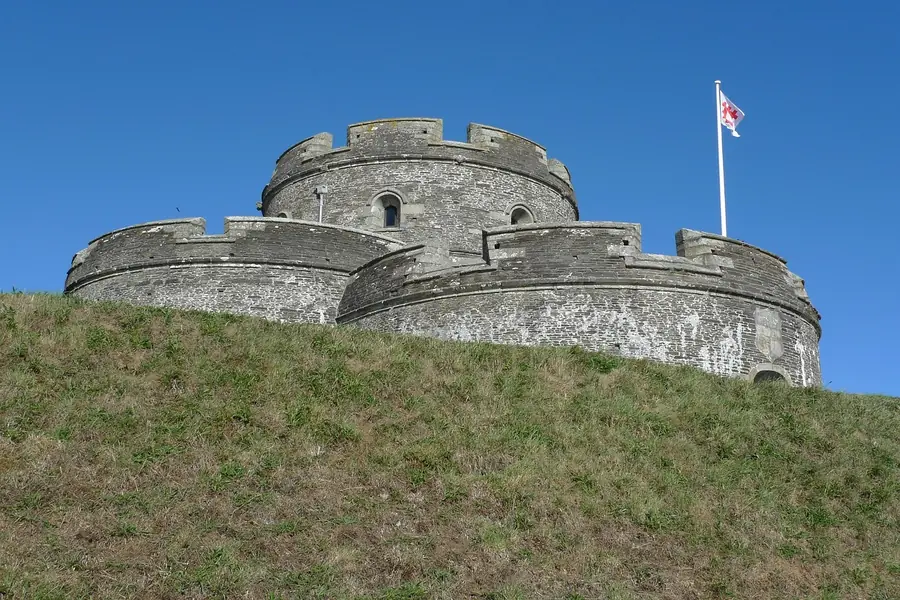
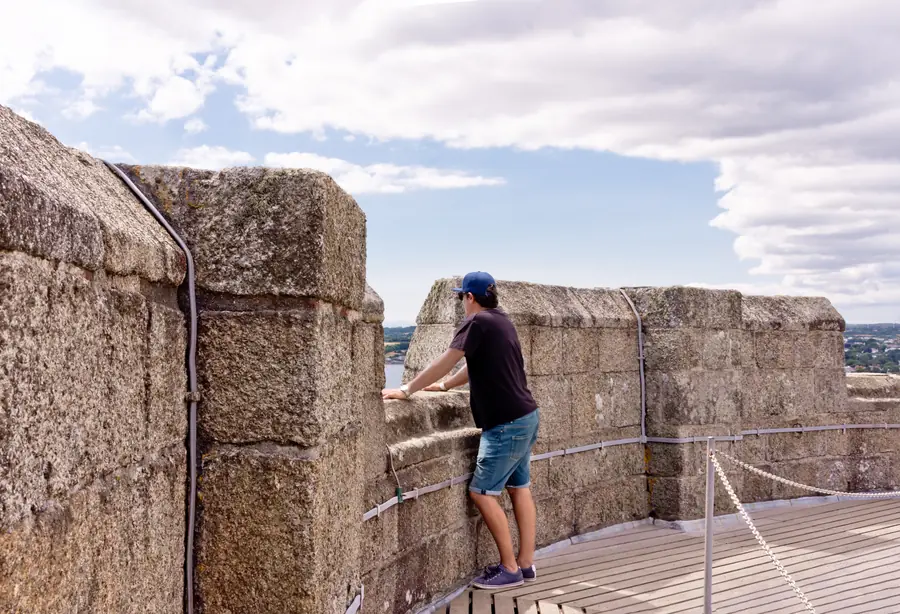
Older Falmouth runs as a thin seam through it. Arwenack House on Grove Place dates from 1385; the Church of King Charles the Martyr came with the charter Charles II granted in 1661; and Pendennis Castle, an artillery fort of 1540 to 1542, holds the headland. The castle is English Heritage and ticketed, and it is the town’s most-reviewed sight at 4.6 from 4,906 Google reviews. Past it, Pendennis Point is open headland with old gun batteries, benches and a wide view over the Fal.
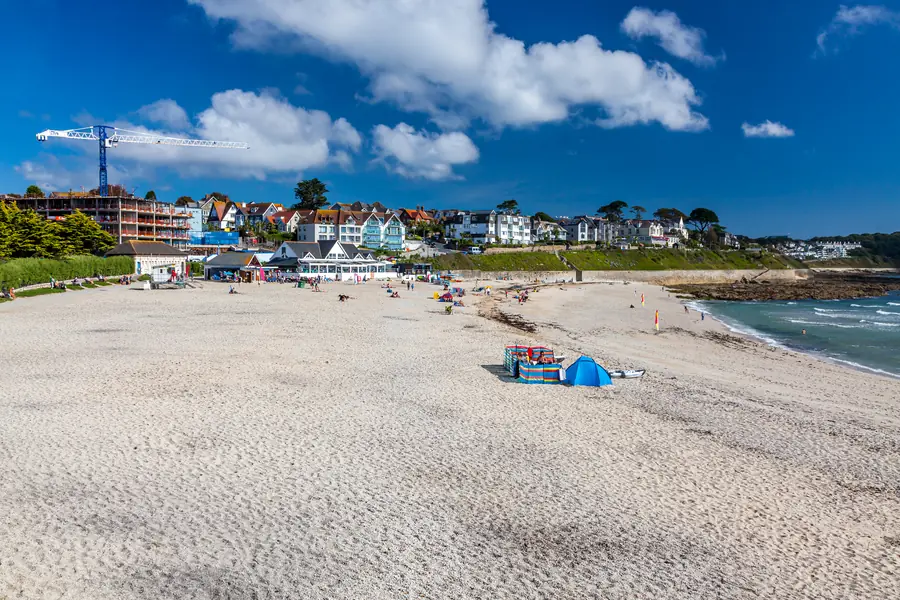
Of the four beaches, Castle Beach is nearest the centre: rocky reef with sand between, good for snorkelling, no lifeguard. Gyllyngvase is the main one, sand and shingle, lifeguarded in summer, with a café and the subtropical Queen Mary Gardens behind. Swanpool and Maenporth lie further round.
Falmouth does not seize up. Across the 80 sampled Google reviews of the eight most-reviewed places in the town — the castle, the maritime museum, the two town beaches, Pendennis Point, the art gallery, Kimberley Park and the St Mawes ferry — six mention crowds or a shortage of parking, and four say the opposite. One visitor at Pendennis Castle on an August bank holiday Sunday in 2023 found “there were a few folk about” and “parked easily”.
What pressure there is comes in summer and off the sea. The Gyllyngvase car park is often full in summer: a visitor in July 2026 who found a street space five minutes away still “would imagine it gets busy in summer”. A visitor at Pendennis Point in May 2026 found it “quite busy with cruise ship tourists”. The Ponsharden park and ride runs 25 May to 25 September, a fair guide to when the town expects the load.
Tides matter more than crowds. A visitor at Castle Beach in August 2025 wrote, “This beach completely disappears at high tide. There are rocks and boulders in the water which makes getting in difficult.” Dog rules differ from beach to beach and by season, so read the signs rather than assuming.
Events concentrate people far harder than any weekend: the Sea Shanty Festival in mid-June, which draws around 65,000 people to the pubs and quaysides; Falmouth Week, the August regatta, whose dates shift from year to year; the Oyster Festival in October, a beer festival a fortnight later and a fish festival in May.
A day covers the town. The walking day published here runs the maritime museum, coffee on Arwenack Street, Castle Beach and Pendennis Castle: 2.7 km, about 45 minutes on foot spread across the day, plus roughly 25 minutes back to the Maritime car park off Avenue Road. Reviewers give the museum a few hours; the castle site is large and involves a lot of climbing, so it takes an afternoon. Half a day buys the harbour front and one beach and nothing else.
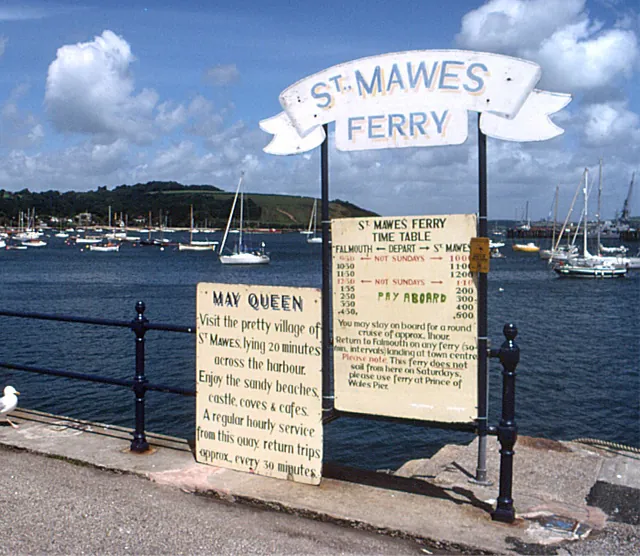
Two nights suits anyone here for the gardens or the water, adding the St Mawes ferry — reviewers put the crossing at fifteen to twenty minutes — and a stretch of the South West Coast Path through the town. In bad weather the indoor holdings are few: the museum and the art gallery.
Distances here are straight-line from the centre. Flushing is 1.5 km away across the Penryn River and has its own ferry. Penryn, 3.4 km up the creek, is the older town — it overshadowed Falmouth in the 13th century — and had 8,489 people at the 2021 census.
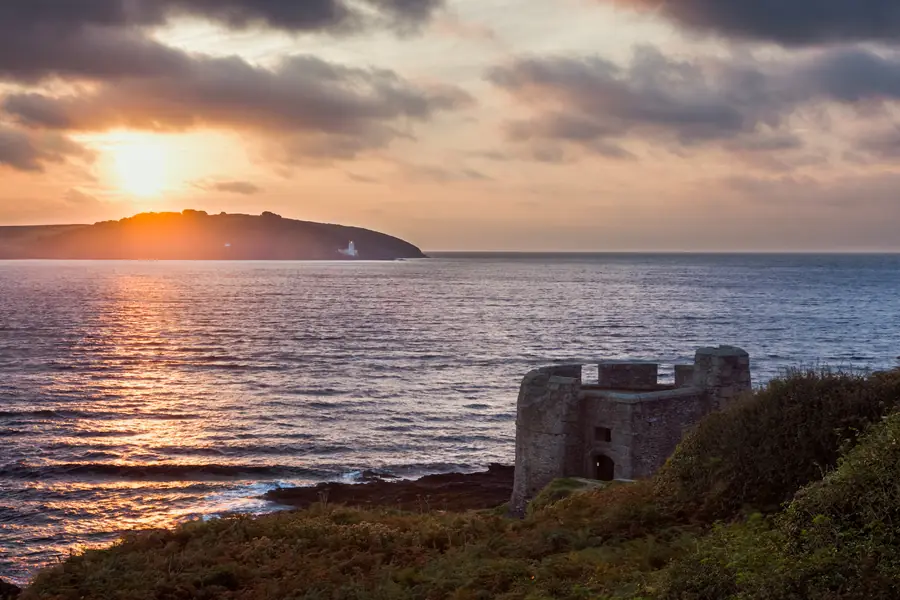
St Mawes is 3.6 km across the Carrick Roads on the Roseland Peninsula, and the ferry there is half the reason to go. Its castle was built alongside Pendennis between 1540 and 1542, on a clover-leaf plan: a visitor in June 2026 called it “small compared to Pendennis castle across the estuary, but is still interesting to see and read about the history of it”.
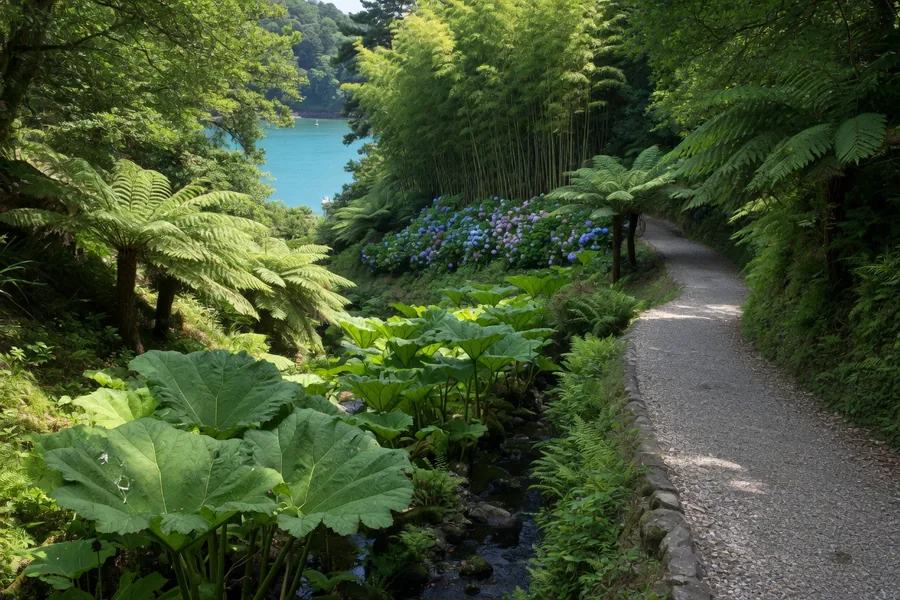
The two big gardens are a few miles south-west at Mawnan Smith, above the Helford: Trebah, 26 acres running down to its own beach, at 4.8 from 4,555 Google reviews, and Glendurgan next door, National Trust, laid out by Alfred Fox in the 1820s and 1830s, with a hedge maze. Both are a steep walk back up from the water.
Beyond that, still straight-line: Constantine 8.4 km, Stithians 8.6 km, Redruth 14.4 km, Helston 15.5 km and Mullion 18.6 km down the Lizard. Truro, where trains change for the Falmouth branch, is 12.7 km north.
The places that define Falmouth.
The most-visited sights in and around Falmouth.
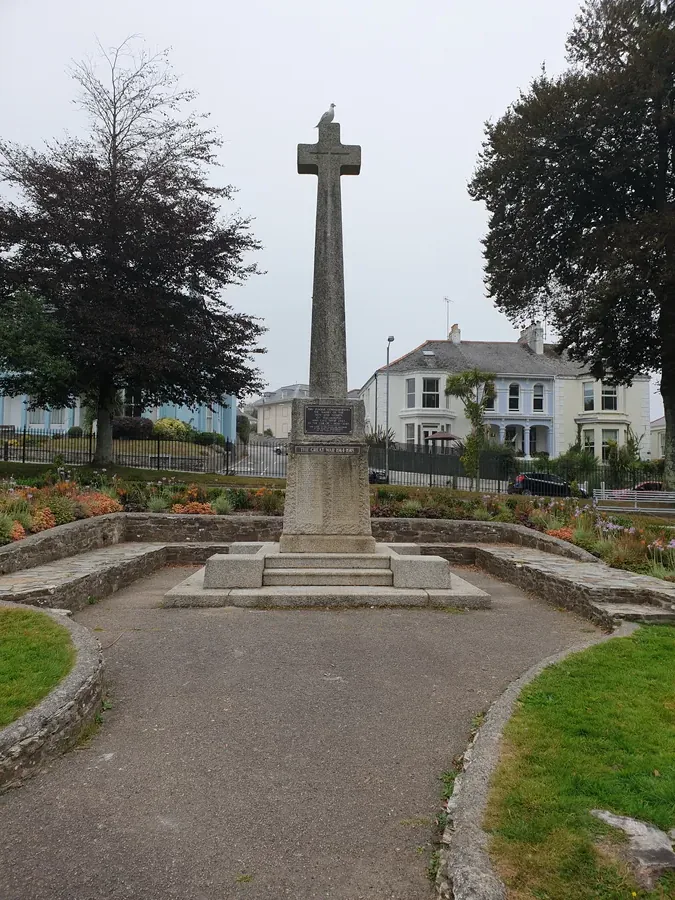
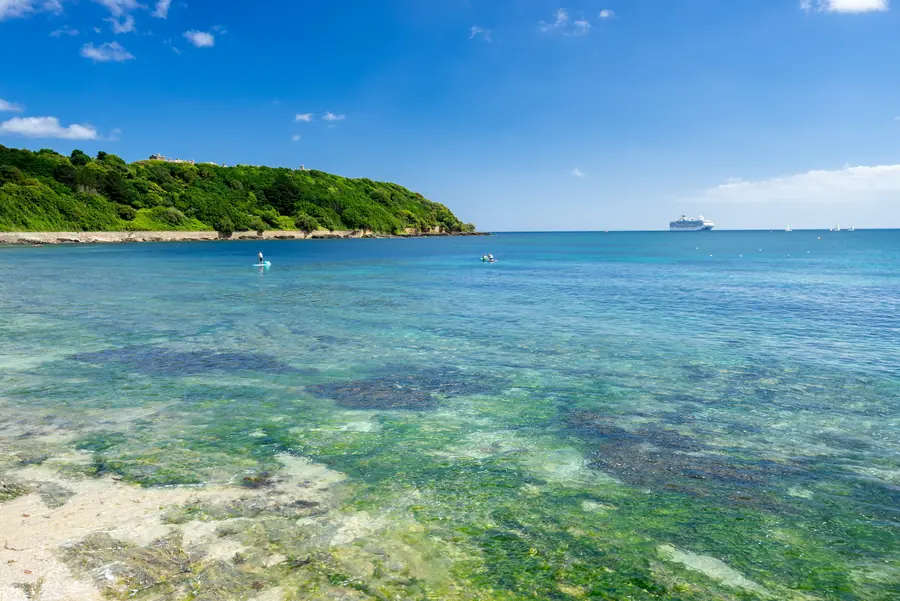
The top sights on one map — and a sensible order to see them in.
Attractions, prices and availability in Falmouth
These come from GetYourGuide's booking widget, which sets their cookies in your browser. Consent to load it and see the attractions and prices.
First Great Western trains run from all over the South of England to Truro, and CrossCountry trains will bring you there from Scotland, the North and Midlands. At Truro station, make your way to the Falmouth branch line at platform 1 - the journey takes around 20 minutes and the trains run regularly.
First Devon and Cornwall operate most bus services into the town, with half hourly services from Cornwall's capital Truro (U1) and Redruth (U2). During term-time, a 15-minute shuttle bus (U3) also operates between the town centre and the university campus (the U1 and U2 also stop there en-route).
Most travellers into Cornwall will come down the M5 and change onto the A30 at Exeter. To get to Falmouth, travellers must turn off the A30 on to the A39 at Fraddon, signposted as Truro. The A39 should be followed all the way through Truro until Falmouth is reached. A lot of accommodation in Falmouth
Written from what we found on the ground.
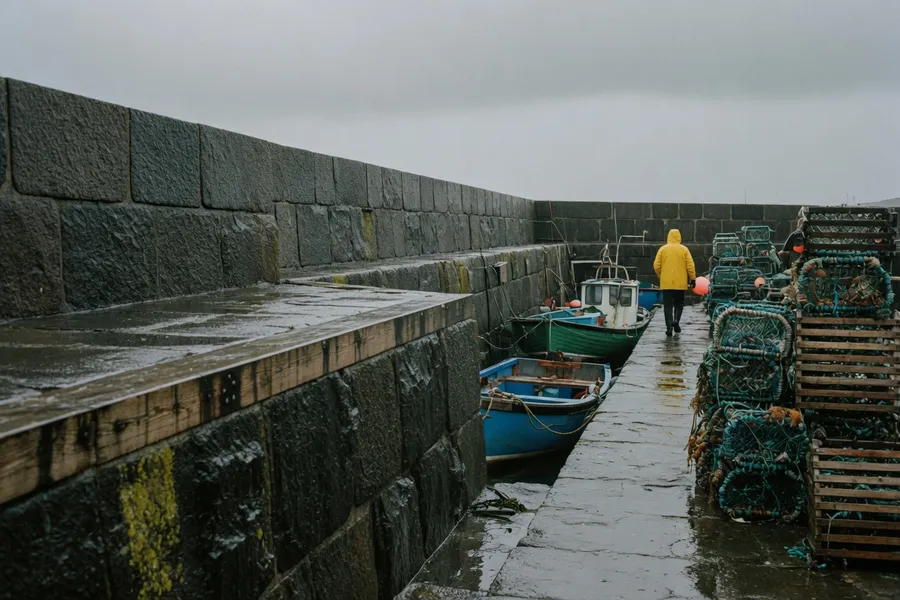 Falmouth in winter Storm watching at Pendennis Point, winter swims at Gyllyngvase, the Oyster Festival and the season it opens, which attractions close and which stay open, and the quieter side of town. Read the guide →
 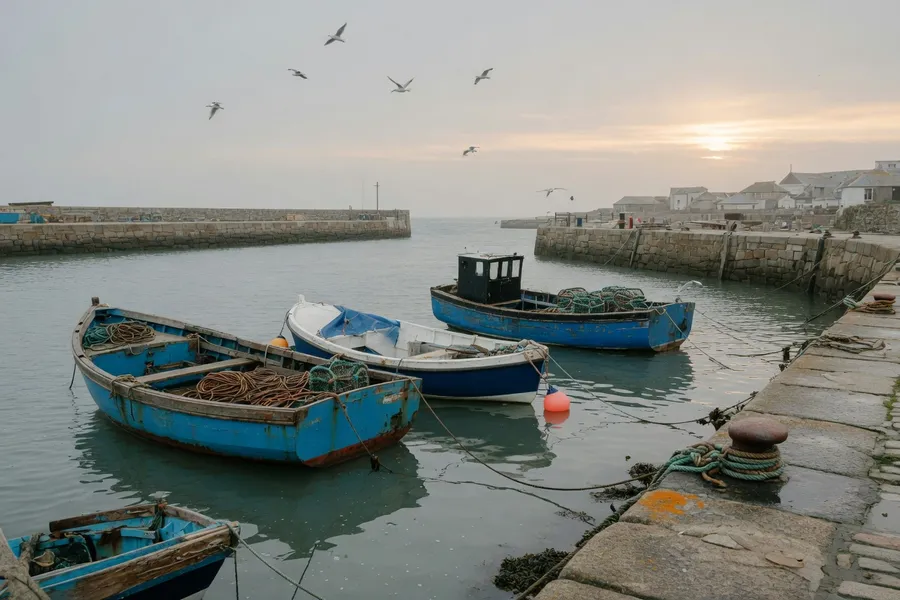 National Maritime Museum Cornwall What is inside Falmouth's National Maritime Museum Cornwall: the Boat Hall's hanging flotilla, the 100 ft Lookout Tower, the underwater Tidal Zone, ticket prices and the Annual Pass, and how long a visit really takes. Read the guide →
 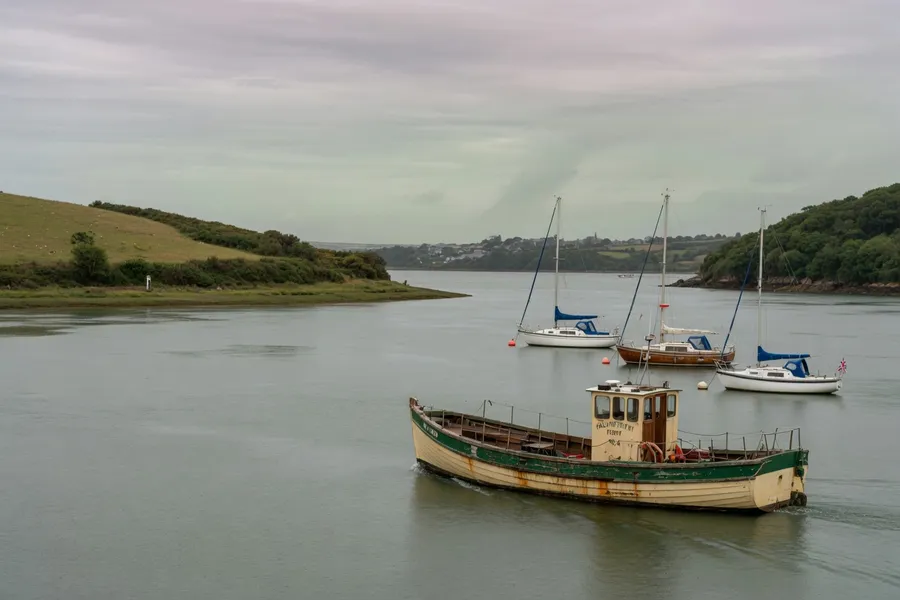 St Mawes and the Roseland from Falmouth A car-free day across Carrick Roads: the St Mawes Ferry, Henry VIII's clover-leaf castle, the seasonal Place Ferry to the coast path, and St Anthony Head — with the ferry seasons that decide whether you can loop back. Read the guide →
 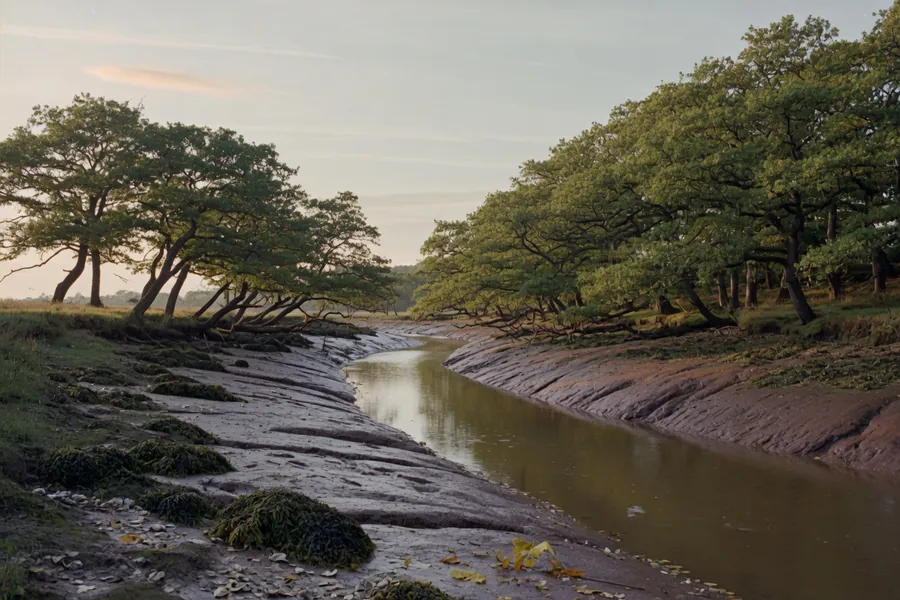 The Helford River from Falmouth How to reach the Helford from Falmouth by bus or car, the seasonal passenger ferry, the Frenchman's Creek walk, kayaking, the two pubs, and why the tide decides the day. Read the guide →