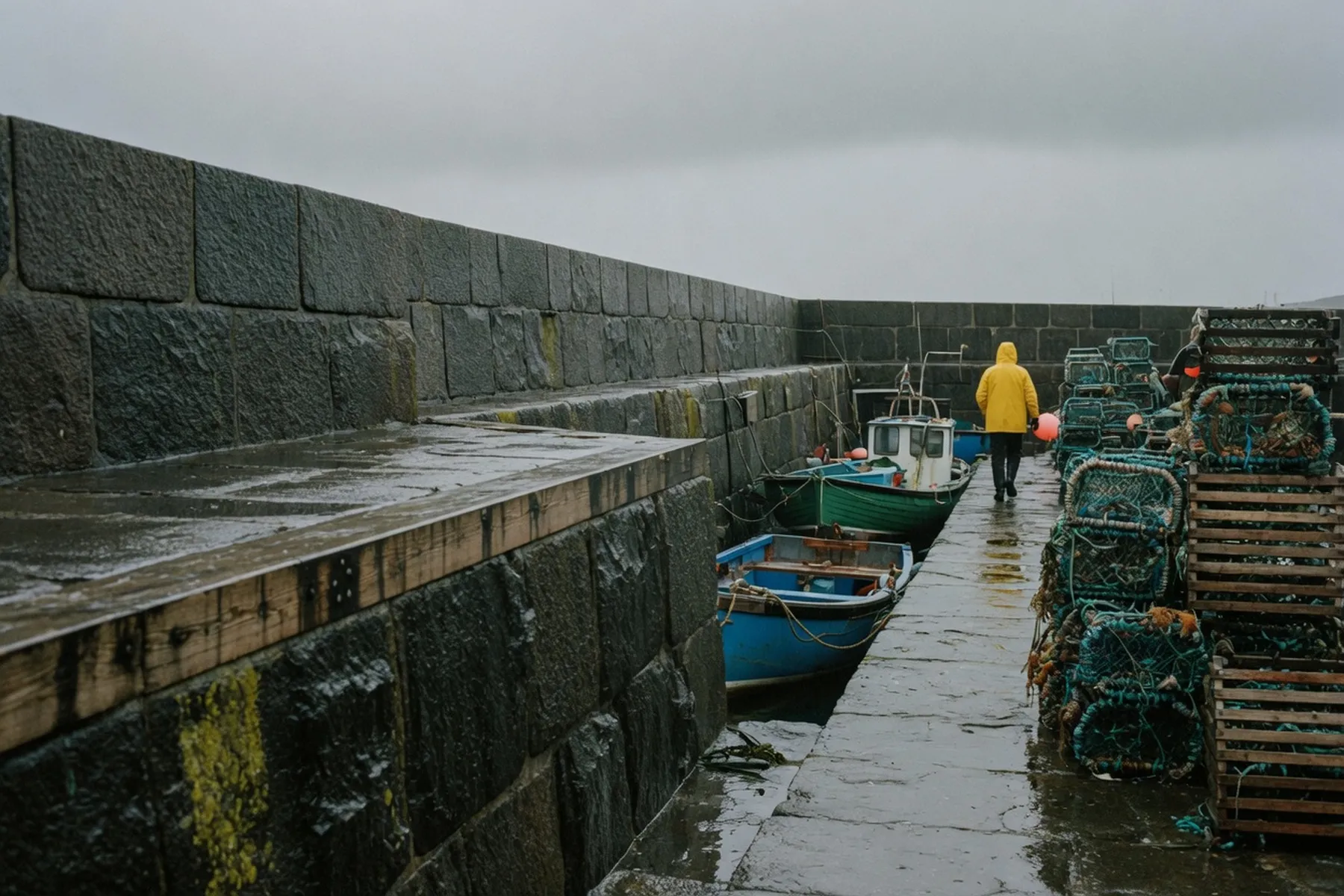
Falmouth in winter is a different town from the one the summer crowd knows. The day-trippers and the beach traffic go home with the lifeguards, the light is gone by late afternoon, and what is left is the working harbour, a handful of attractions that stay open all year, and the Atlantic weather doing what it does best. It suits anyone who wants Cornwall’s coast without the queue for it, and it asks a little planning in return, because the ferries, the buses and the opening hours all thin out for the season.
Short days are the first thing to plan around. In mid-winter the light fails in the late afternoon, so a full day out has to start earlier than it does in July. The weather is mild by British standards but wet and changeable: low grey skies, spells of rain, and the occasional clear cold day that is the best of the season. Fewer visitors means the harbourside is your own, while the university term keeps the cafés and pubs busy through the week, so the town never quite empties. It suits people who want the coast path, the ferries and a fireside without the summer crowds.
Pendennis Point is the free car park and headland viewpoint at the mouth of Falmouth Bay, with open views over Carrick Roads and towards St Mawes, and it is the natural place to watch a winter sea from safety. There are no lifeguards on this coast in winter — the RNLI’s line is that no flags means no lifeguards. Watch from the car park or from a high, well-back viewpoint, never from rocks, sea defences or a low path, and if you feel the spray you are already too close. The dangerous combination is a high tide with a swell running. Check the Met Office weather warning and the tide times before you go, and stay away entirely under an amber or red wind warning. If you see someone in trouble, call 999 and ask for the Coastguard, and do not enter the water yourself.
Pendennis Castle stands on the same headland but higher and more sheltered, and its sea views make it a good foul-weather companion to the point below. From 2 November 2026 it opens Saturdays and Sundays only, 10am to 4pm with last entry at 3pm, a pattern that holds through 23 December. It opens daily 10am to 4pm over the Christmas and New Year spell from 27 December to 1 January, and is closed 24 to 26 December. From 2 January to 13 February 2027 it returns to weekends, with February half-term from 13 to 22 February opening daily. The address is TR11 4NQ, booking online in advance is the best price, and members go free. Check the castle’s own calendar for the exact day you want.
Gyllyngvase Beach faces south-east into the bay, sheltered behind Pendennis Head, so it is calmer than the north coast and shelves gently into the sand. No RNLI lifeguards are on duty in winter, so the rule is to swim with others and tell someone your plan before you go in. The sea off Cornwall sits around 12°C in December and falls to its coldest, under 10°C, in February and March; seatemperature.info keeps live readings if you want the current figure. Anything under 15°C is cold water, which means cold-water shock on entry and a dangerous afterdrop when you get out, so wade in slowly rather than diving. A wetsuit with gloves, boots and a hood, a bright swim cap and a tow float are the sensible kit, with warm clothes and a hot drink waiting on the sand. Swim on a mid-to-high tide, when the water deepens quickly near the tideline; rips are possible on spring tides and in strong southerly or easterly winds, especially near the rocks on the right of the beach. If you are in trouble, float on your back to get your breathing under control, and if it is someone else, call 999 and ask for the Coastguard rather than going in after them.
The Falmouth Oyster Festival usually lands in the second week of October at Events Square on Discovery Quay, and it matters to a winter visit not as a listing but as the marker that opens the native oyster dredging season, which runs from October into early spring. A trip between November and March sits inside that season, when the native oysters are being dredged in the Fal and landed at the town that built its reputation on them. The 2026 festival ran from 8 to 11 October; the days are free and the evenings are ticketed, and the dates move each year, so check the festival’s own site before you assume next year’s weekend.
It is the single most useful thing to know before you book, and it is rarely laid out side by side. Glendurgan closes entirely for the winter, from about early November to mid-February, reopening around mid-February; when it is open it is Tuesday to Sunday. Trebah is the opposite: open every day all year from 9.30am, closing only on Christmas Eve, Christmas Day and Boxing Day, and RHS members go free from November to March. The National Maritime Museum Cornwall opens daily 10am to 5pm all year, closed only 24 to 26 December, and its café moves to winter hours. The Falmouth Art Gallery is free and open Monday to Saturday 10am to 5pm, but closes on Sundays, bank holidays and across Christmas into early January. The pattern to hold in mind: the gardens and the ferries thin out, while the museum and the galleries keep their indoor year round.
The St Mawes Ferry moves to its winter timetable from 2 November 2026, and the first thing to know is that it runs from Prince of Wales Pier only — Custom House Quay does not run in winter. It goes roughly hourly from about 8.30am to 4.45pm, takes around twenty minutes, and tickets are bought on board; bikes and dogs travel free. It is tide- and weather-dependent, so check Fal River Cornwall’s live status on the day. The buses change more dramatically: First Bus withdraws all its Cornwall services after 14 February 2026 and the network passes to Transport for Cornwall, so do not trust a route number you remember — check transportforcornwall.co.uk. The Maritime Line trains between Truro and Falmouth Docks run about every half hour through the winter daytime, and the stations are unstaffed with ticket machines.
The season’s set pieces cluster in the last weeks of the year. The Christmas lights switch-on is Thursday 26 November 2026 at 7pm on The Moor, free, with a parade led by Pendennis Brass from Events Square. The Festive Weekend runs Saturday 12 and Sunday 13 December, 11am to 5pm on The Moor and Events Square, with markets, lights, an artificial ice rink and a snow globe. The Poly on Church Street holds its Christmas market from 4 to 6 December, and there are carols on Christmas Eve morning, Thursday 24 December. All of these are run by the Falmouth Town Team or their organisers, and the details can move, so check the organiser’s page before you set out.
Discovery Quay, around the museum and Events Square, is the tourist hub and it stays that way. Walk a few minutes instead to Custom House Quay and the terraces above the harbour, and you find everyday Falmouth — the working waterfront, the packet-ship pubs and the cafés that run for locals through the university term. The ‘Front on Custom House Quay is a cellar real-ale pub, and Provedore on Trelawney Road is a café and small-plates place; both are the kind of spot you find by walking rather than by searching. Between the two quays is five to fifteen minutes on foot, and the difference between them is the difference between the town’s tourist face and its own.
A sensible off-season day starts with the daylight and works backwards from it. Take a winter swim or an hour of storm watching at Pendennis Point in the morning while the light is good, then anchor the middle of the day indoors — the castle on a weekend, or the museum any day — and if the tide and the weather allow, close the loop with the winter ferry to St Mawes and back. End with a warm meal at the Custom House Quay end of town. If the weather turns, the whole day folds into the museum and the galleries without wasting the trip. The coast in winter rewards the people who read the tide tables and the weather warnings first; do that, and the quiet town is the point rather than the compromise.