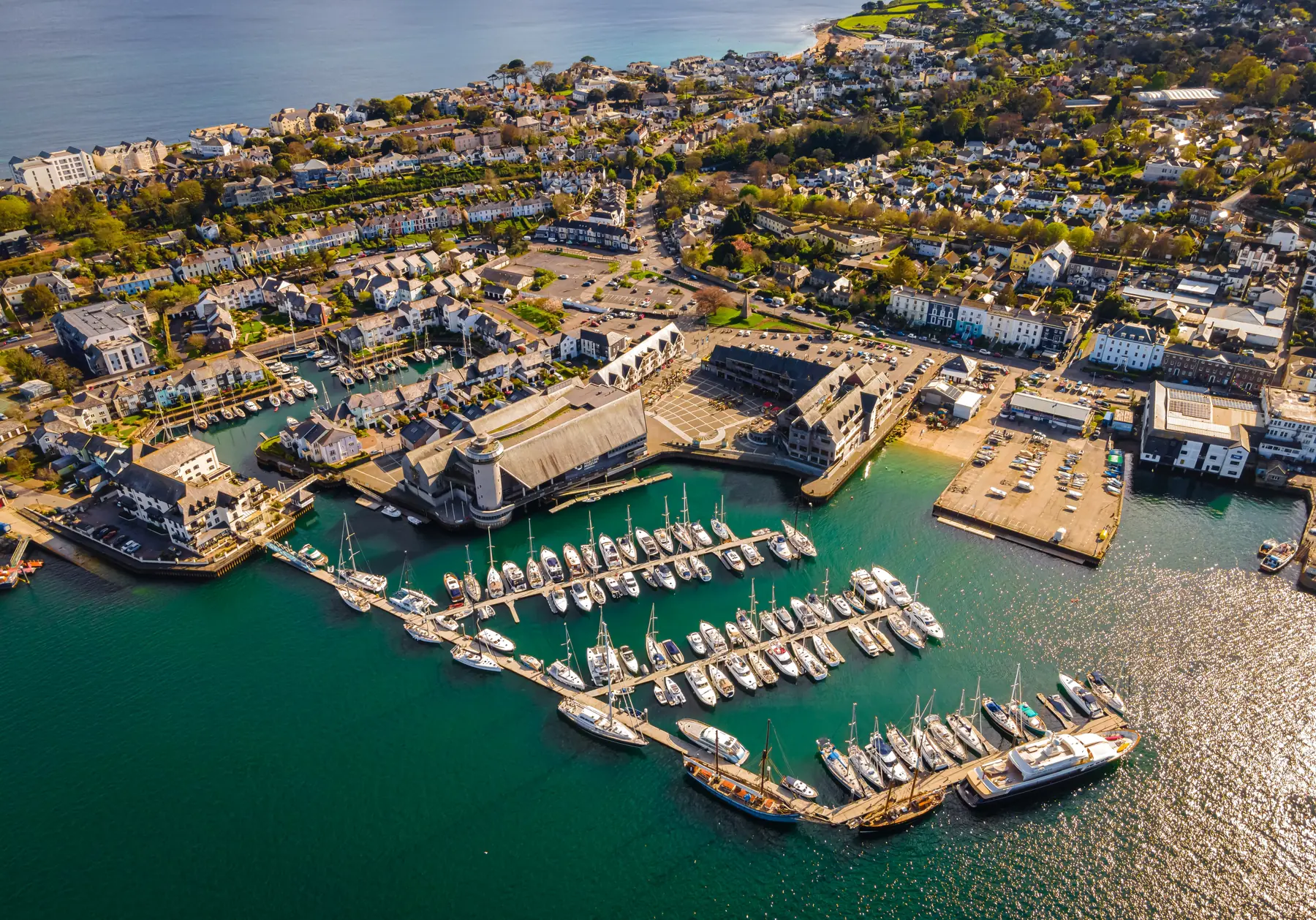
Falmouth is a town where the best things are free and the paid attractions are optional. Four beaches within walking distance of the centre, one of the finest natural harbours in the world to look at, a free art gallery with a genuinely good collection, a headland with a castle on it, and the South West Coast Path running straight through — none of that costs anything.
All four are free, and three are walkable from the town.
Gyllyngvase, six hundred metres from the centre, is the main beach — sand, a promenade, a café and lifeguards in season.
Castle Beach, under Pendennis, is small, rocky and the best rock pooling near the town at low tide.
Swanpool, a kilometre and a half out, has sand, a café and a nature reserve behind it.
Maenporth, four kilometres south, is the quiet one.
Only parking costs anything, and Swanpool’s beach car park is free. Our beaches guide has the detail on each.
Free entry, on The Moor, and one of the leading collections in Cornwall and the south-west — old masters, Victorian painters, maritime art and British illustration, in a well-run gallery with an active family programme. It is the best free hour in the town.
Kimberley Park is a Victorian public garden a short walk from the centre with subtropical planting that reminds you how mild this corner of Cornwall is. Queen Mary Gardens on Cliff Road do the same above Gyllyngvase, with a view over the bay.
Falmouth is a working port — the third largest natural harbour in the world, with ship repair yards, a busy marina, the docks and a constant traffic of boats. Watching it from Custom House Quay, the Prince of Wales Pier or the harbourside is free and genuinely absorbing. The Custom House Quay and the old town streets behind it are the historic core.
Falmouth’s art school gives the town a density of small galleries, studios and exhibitions that is unusual for its size, and many are free to walk into.
The headland at the end of the town. The castle charges, but the walk around the point is free, there is free parking at Pendennis Head, and the views over the harbour mouth and out to the Channel are the best in the area. The Second World War gun positions and the coast path around the head cost nothing.
The South West Coast Path runs through Falmouth and is free for its entire 1,014 kilometres. The best free walking near the town:
Our walks guide covers the routes.
Kennall Vale, eight kilometres north near Ponsanooth, is a Cornwall Wildlife Trust reserve in a wooded gorge where a nineteenth-century gunpowder works is being taken back by moss and oak. Free, atmospheric and best after rain.
Swanvale, Tregoniggie and Carwinion are smaller local reserves, all free. Devichoys Wood is an ancient woodland reserve on the Truro road.
Gwennap Pit, ten kilometres north, is a terraced natural amphitheatre where John Wesley preached to thousands of miners. Free and strange.
Flushing, directly across the water, has a waterfront terrace of eighteenth-century captains’ houses and a beach. The ferry is not free but is very cheap, and it is one of the best value few minutes in Cornwall.
Penryn, three kilometres up the river, is older than Falmouth and considerably less visited, with a granite high street and a small museum.
St Mawes on the Roseland is free to walk round once the ferry has got you there.
The unavoidable costs are parking and the ferries, and both are manageable.
Free parking exists at Pendennis Head, Pendennis Castle, Swanpool Beach, Town Quarry and Well Lane. The Park and Float at Penryn lets you leave the car outside town and come in by boat, which is cheap and much the nicest arrival.
Better still, arrive by train. Falmouth has three stations on the branch line from Truro, and the whole town is walkable from Falmouth Town station. Buses run half-hourly to Truro and Redruth, take contactless payment, and weekly area passes are available.
Start at the art gallery on The Moor when it opens. Walk down through the old town to Custom House Quay and along the harbourside, then out past the docks to Pendennis Point and round the headland — an hour, with the whole harbour below you. Come down to Castle Beach for rock pools at low tide, walk the cliff path round to Gyllyngvase and on to Swanpool for the afternoon, and finish with the sunset from Queen Mary Gardens.
That is a full day on one of the best stretches of the Cornish coast, and it costs nothing.
Falmouth’s calendar has more free content than most Cornish towns. Falmouth Week in August is the largest sailing regatta in the south-west, and while entering costs money, watching does not — the racing happens in the bay in front of the town and the shoreline is the grandstand. There is a week of free events on the quays alongside it.
The Sea Shanty Festival in June fills the pubs, the quays and the streets with singing, and almost all of it is free to listen to. The Oyster Festival in October marks the start of the dredging season, when Falmouth Bay oysters are still fished under sail — the last commercial fishery in Europe to work that way. And the art school’s end-of-year shows open to the public each summer.
Worth checking before paying. Glendurgan, Trelissick and St Anthony Head are National Trust; Pendennis and St Mawes castles are English Heritage. Between them that covers a large share of the paid attractions within half an hour, and for a week here an existing membership changes the arithmetic considerably.
This deserves its own heading because it is the thing visitors most consistently underestimate. Falmouth is not a preserved harbour with pleasure boats in it; it is a working port, and one of the busiest ship-repair centres in northern Europe.
From Custom House Quay and the harbourside walk you can watch cargo ships, superyachts, research vessels and naval auxiliaries moving in and out of the docks. From Pendennis Point you look straight down the deep-water channel that brings them in. On the Penryn River side there are boatyards, and up the Fal in the King Harry reach large ships are sometimes laid up between charters, moored in the middle of wooded countryside, which is one of the strangest sights in Cornwall.
Add the yacht racing on summer evenings, the pilot boats, the ferries criss-crossing, and the oyster boats working under sail in winter — the last commercial fishery in Europe to do so, under a byelaw banning engines — and you have a free spectacle that changes every day. Bring binoculars. An hour on a bench at the end of the quay is one of the better free hours in Cornwall.
If the first free day covered the town, the second should cross the water. Take the Flushing ferry — a few minutes and a couple of pounds, which is as close to free as a boat gets — and walk the shore path north towards Mylor, with the whole Carrick Roads on your right and Falmouth’s docks opposite. Come back through Penryn, which is older than Falmouth, considerably less visited, and has a granite high street and a small free museum.
In the afternoon, drive or bus north to Kennall Vale for the ruined gunpowder works in the wooded gorge, or west to the woodland reserves at Devichoys and Tregoniggie. All are free, all are quiet, and none of them appears on the standard Falmouth itinerary.
Yes, entry is free.
Yes, all four. Only parking is charged, and Swanpool’s beach car park is free.
Pendennis Head, Pendennis Castle, Swanpool Beach, Town Quarry and Well Lane are all free.
Yes. The headland, the coast path and the car park are free; only the castle itself charges.
The beaches, rock pooling at Castle Beach at low tide, Kimberley Park, and watching the harbour work.