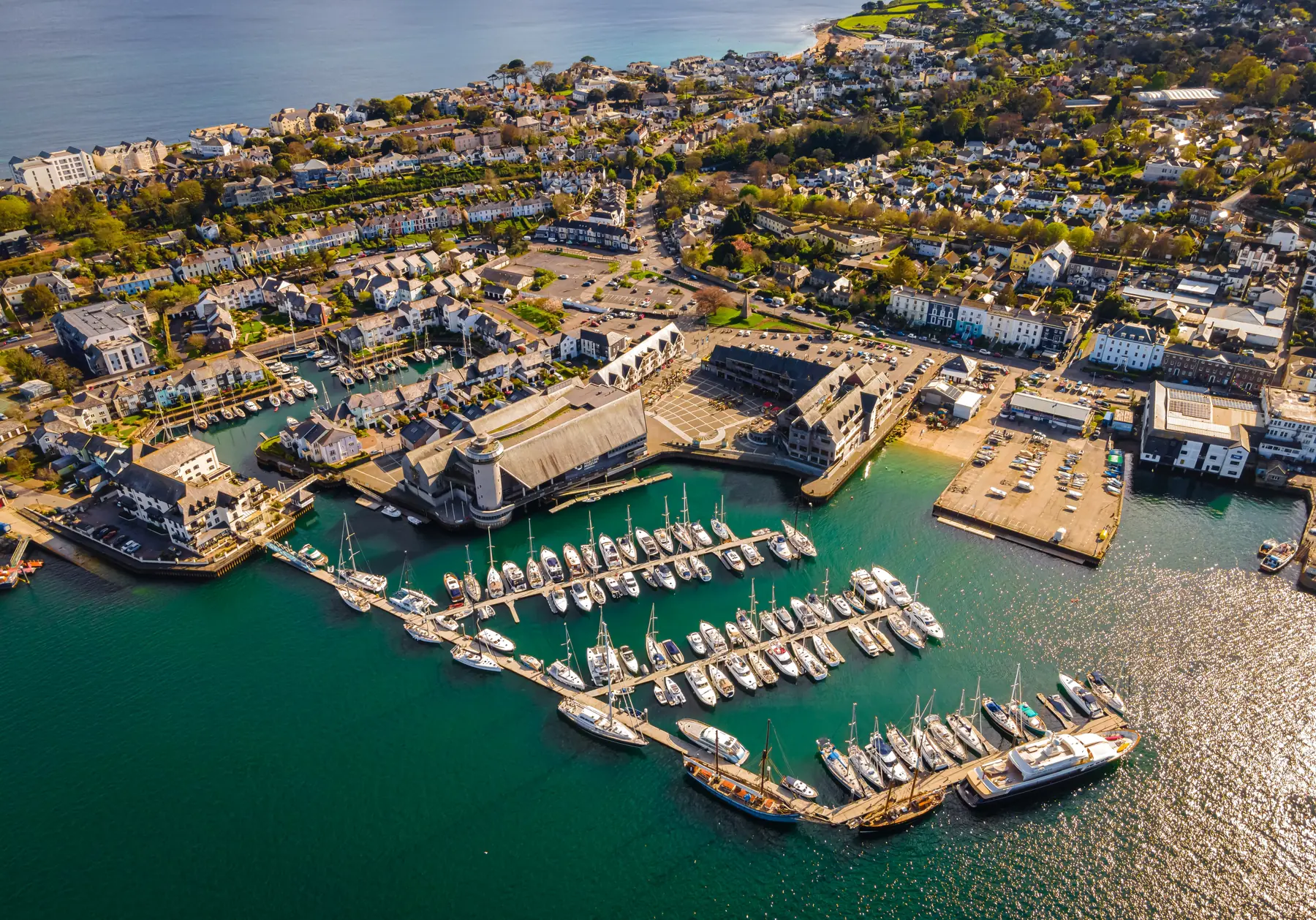
Falmouth has four beaches and they are all different, which is unusual for a town this size. They run in a line south-west from the headland, linked by a surfaced coast path, and you can walk from the first to the third in under an hour. The fourth needs a short drive or a longer walk.
They face south-east into Falmouth Bay, sheltered from the prevailing south-westerlies by the Lizard, which is why the water here is calmer and warmer than on Cornwall’s north coast. There is no surf to speak of. What there is instead is swimming, sailing, paddleboarding and, at Castle Beach, some of the best rock pooling in the county.
Distance from the centre: 600 metres, an easy walk.
The main beach and the one most people mean when they say Falmouth beach. A broad crescent of sand backed by a promenade and Queen Mary Gardens, with a beach café that does proper food and stays open into the evening in season, lifeguards through the summer, showers and toilets.
It shelves gently, which makes it the best swimming beach in the town and a safe one for children. Watersports hire — kayaks, paddleboards, wetsuits — operates from the beach. The sand is coarse Cornish sand rather than fine, and there is a good deal of it at low tide.
It is the busiest of the four in August. It is also the one you can walk to from the station in ten minutes, which is why.
Parking: Gyllyngvase long stay car park behind the beach, charged. Free parking is a short walk away at Town Quarry.
Distance: one kilometre, under the walls of Pendennis.
Smaller, rockier and much the most interesting. Castle Beach sits below Pendennis Point in a series of coves separated by reefs, and at low tide the reefs are exposed as one of the best rock pool systems in south Cornwall — an established rock pool project runs family sessions and surveys here, and the variety of life is genuinely remarkable.
There is sand at low water, less at high. It is quieter than Gyllyngvase, it has a café, and the view across to St Anthony Head and the harbour mouth is the best of the four.
Go at low tide. At high water it is a small beach; at low water it is a completely different place. A tide table is not optional here.
Parking: free at Pendennis Head and Pendennis Castle, both a short walk above the beach.
Distance: 1.5 kilometres, on the coast path past Gyllyngvase.
Sand and shingle, a café, a watersports centre, and behind the beach the Swanpool itself — a brackish lagoon that is a nature reserve, separated from the sea by the beach. It is one of only two places in Britain where a particular colonial bryozoan is found, which is the sort of fact that makes more sense once you have seen how odd the pool is.
Swanpool is quieter than Gyllyngvase, has a boating lake and a play area, and is popular with families who want the same facilities with fewer people. There is a diving school and it is a well-used snorkelling spot.
Parking: the beach car park at Swanpool is free, which makes this the cheapest beach day in Falmouth.
Distance: four kilometres south, or an hour and a half on the coast path from Swanpool.
The quiet one. A sheltered sandy cove with a café, a beach restaurant and a good deal of space, backed by low cliffs and reached down a lane. There is a wreck visible at very low tide. It is popular with locals and with people staying at the hotels along the Maenporth road, and it is noticeably less busy than the town beaches even in August.
The walk out along the coast path from Swanpool is one of the best short walks in the area — see our walks guide.
Parking: a paid car park above the beach.
Swimming: Gyllyngvase, for the gentle shelve and the lifeguards.
Rock pooling: Castle Beach at low tide, without question.
Families with young children: Gyllyngvase for facilities, Swanpool for free parking and fewer people.
Getting away from it: Maenporth.
Watersports: Gyllyngvase and Swanpool both have hire and instruction.
A view: Castle Beach, looking out at the harbour mouth and the ships coming in.
Seasonal restrictions apply on the main beaches — typically Easter to the beginning of October on Gyllyngvase and parts of Swanpool. Castle Beach and Maenporth are generally more relaxed, and outside the restricted season all four are dog beaches. Check the signs at the top of the beach, which are kept current.
Falmouth Bay is sheltered and there is no significant surf, which makes the beaches unusually benign by Cornish standards. Two things still matter.
Lifeguards cover Gyllyngvase through the main season only. Swim between the flags when they are there and be more careful when they are not.
Tides change the beaches completely — Castle Beach in particular is a different place at low water, and the reefs that make the rock pools also create channels you should not be swimming in as the tide turns.
The water is cold outside high summer. Sea temperatures here peak in late August and early September, which is when Cornish people swim.
The Helford gardens have their own private beaches — Trebah and Glendurgan both drop through subtropical valleys to the river — and Flushing and St Mawes, both a short ferry across the water, have small beaches of their own. Summers Beach at St Mawes is a good quiet swim.
Getting there. Gyllyngvase is a ten-minute walk from Falmouth Town station; the town bus loop serves the beaches; Maenporth needs a car or the coast path.
Facilities. Cafés at all four, toilets at Gyllyngvase, Swanpool and Maenporth, lifeguards at Gyllyngvase in season.
Best time. Early morning for an empty beach and flat water; late August and September for the warmest sea.
Falmouth has a large and visible year-round swimming community, and Gyllyngvase in particular has a group in the water most mornings regardless of the month. The sheltered bay, the absence of surf and the relatively mild south-Cornish water make it one of the better places in Britain for it.
Sea temperatures peak in late August and September — which is why Cornish people swim then rather than in July — and bottom out in February and March. Outside high summer a wetsuit makes the difference between a swim and a dip, and the sauna culture that has grown up around cold-water swimming has reached here too, with a sauna operating across the water at Flushing.
If you are swimming outside the lifeguarded season, the usual rules apply: go with someone, know where you are getting out, and be honest about the cold.
If the town beaches are busy, three more are within a short drive or a ferry ride and all are quieter.
Summers Beach at St Mawes is a small sheltered strip below the village, twenty minutes across the harbour by ferry, with calm water and a view back at Falmouth.
Flushing has a shingle beach right in the village, five minutes across the water.
Durgan, below Glendurgan on the Helford, is a hamlet with a beach on the river — not the open sea, but sheltered, beautiful and reached through a subtropical garden.
Further out, the Roseland beaches at Porthcurnick and Towan and, on the Lizard, Kynance Cove — serpentine rock and turquoise water, and one of the most photographed beaches in Britain — are worth the drive on a settled day.
Gyllyngvase for a general beach day; Castle Beach at low tide if you want rock pools and a view.
Gyllyngvase, Swanpool and Maenporth are sand; Castle Beach is sand and rock, with much more sand exposed at low tide.
Swanpool’s beach car park is free, and Pendennis Head and Pendennis Castle are free and close to Castle Beach.
Yes. The bay is sheltered and there is no significant surf, and Gyllyngvase has lifeguards in season.
With seasonal restrictions on the main beaches through the summer. Check the signs; outside the season all four are open to dogs.