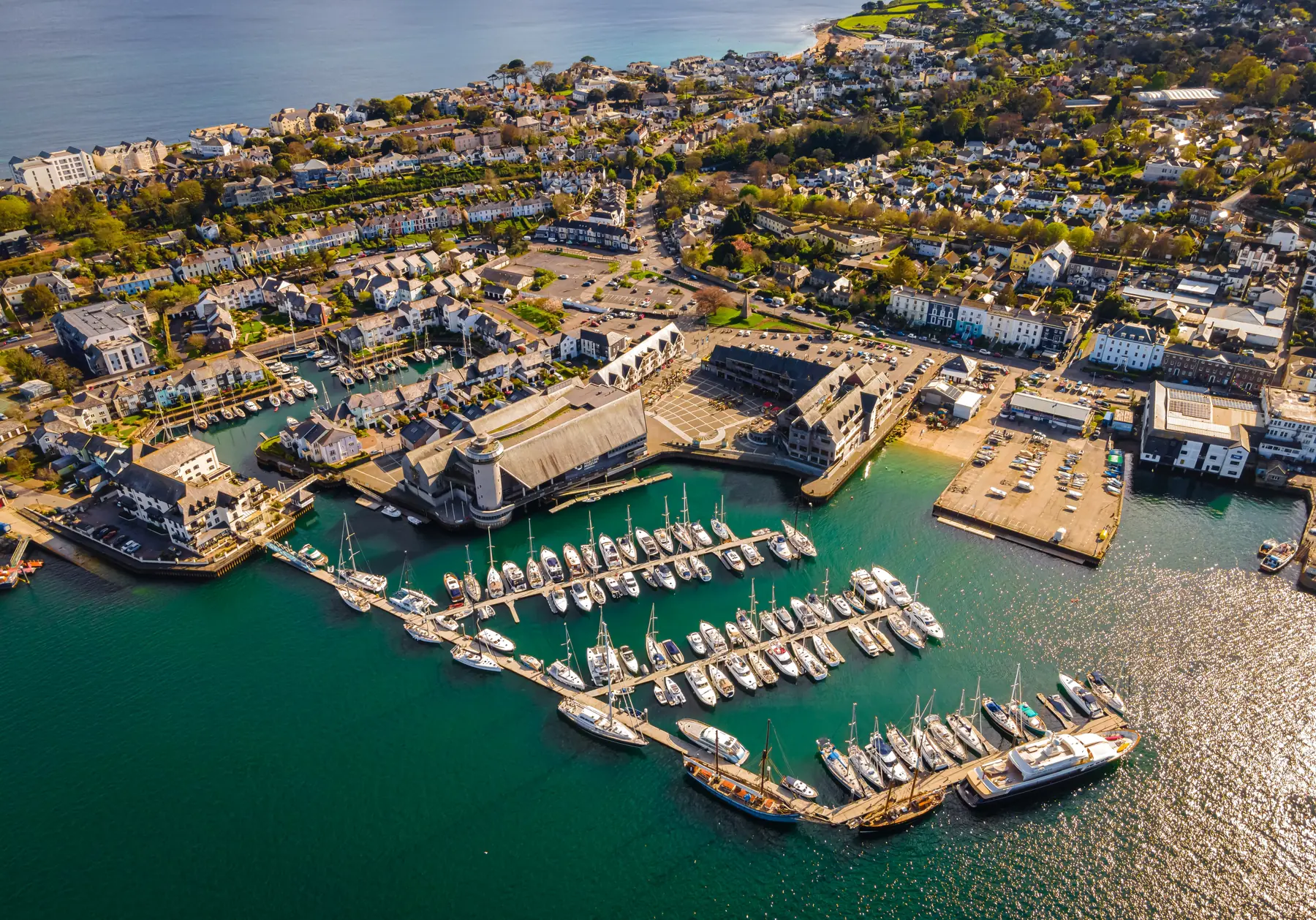
Falmouth stands at the mouth of the third largest natural harbour in the world, and the single best thing you can do here is get onto it. The harbour — the Carrick Roads — is a drowned river valley several kilometres across, with creeks running inland in every direction, a working port at its head and the open Channel at its mouth. From the shore you see a fraction of it.
There are three sorts of boat trip here, and they cost very different amounts. The ferries are transport and are cheap. The river and coastal cruises are half-day excursions. And the wildlife trips and sea safaris go looking for something specific.
The best value boat trip in Cornwall. A passenger ferry runs from the Prince of Wales Pier across the Carrick Roads to St Mawes on the Roseland Peninsula — about twenty minutes, with Pendennis Castle on one side, St Mawes Castle ahead and the whole harbour opening around you.
It runs year-round in normal weather with a reduced winter timetable, and it costs a little more than a bus fare. At the far end there is a village of steep lanes, a Tudor artillery castle, several pubs and the Roseland beyond. A second, smaller ferry continues from St Mawes to Place, from where the coast path leads to St Anthony Head.
Five minutes across the Penryn River from the Prince of Wales Pier to the village opposite — a terrace of eighteenth-century sea captains’ houses, a beach, two waterfront pubs and a shore path to Mylor. It is the shortest ferry and the one locals use.
A small seasonal ferry crosses the Helford River between Helford Passage, below Trebah, and Helford village on the south bank. It opens up the whole south side of the river including Frenchman’s Creek, and it is the way to turn a garden visit into a proper day out.
A different kind of ferry: leave the car at Penryn and come into Falmouth by boat. It is cheap, it removes the town’s parking problem, and it is a considerably better arrival than a multi-storey.
Enterprise Boats run from Falmouth up the Fal to Truro — an hour or so through the creeks, past the laid-up ships that sometimes moor in the deep water of the King Harry reach, under wooded banks to the city quay. It is tide-dependent, so the timetable moves through the week, and at low water the service runs to Malpas with a bus link.
It is one of the great river journeys in Britain and it costs about what a taxi across town would.
The same operators run to Trelissick, the National Trust estate on the King Harry Ferry reach, which has its own landing and is a much better way to arrive than by road.
Falmouth Bay and the water off the Lizard are among the best places in England for marine wildlife, and several operators run trips specifically for it.
Grey seals are resident and reliably seen. Bottlenose and common dolphins appear through the year. Harbour porpoises are common. Basking sharks — the second largest fish in the world, and harmless — arrive in early summer, though numbers vary enormously from year to year. Sunfish, minke whales and, occasionally, larger whales are all recorded.
The wildlife operators here are small, skippered by people who have been watching this coast for decades, and they are honest about the fact that wildlife does not perform to a timetable. Trips are typically three to four hours and go out into the bay and towards the Lizard.
For something more energetic, several operators run RIB trips — fast inflatable boats that get out to the Manacles, the Helford, the Lizard and the wrecks much quicker than a cruise boat can. They are exhilarating, they are not comfortable, and they suit older children and adults rather than toddlers.
Private charters and skippered speedboat trips are available for groups who want to set their own route.
Falmouth is a serious sailing town — it hosts Falmouth Week in August, the largest regatta in the south-west, and the harbour is full of racing on summer evenings.
Visitors can get involved at several levels: sailing schools run introductory sessions and RYA courses; traditional boat charters take passengers out on classic gaffers and pilot cutters; and VentureSail and similar operators run voyages on historic vessels, from a day to a week.
If you want to sail rather than be sailed, several operators hire small boats to those with the experience.
Kayak and paddleboard hire operates from Gyllyngvase Beach and from the harbour, and the sheltered creeks — particularly the Helford and the Penryn River — are exceptional paddling water. Guided trips run to the creeks and along the coast, including some in the evening.
Falmouth Boat Hire and similar operators rent small motorboats by the hour or the day for those who want to explore the harbour independently, which is a genuinely good way to spend an afternoon.
Most trips run from around Easter to October, with the wildlife season peaking in summer. The St Mawes ferry runs year-round; the Flushing and Helford crossings are more seasonal.
Everything is weather-dependent. Trips are cancelled in wind and rough water, sometimes at short notice, and operators will generally rebook rather than refund. Book ahead in July and August, and be flexible about which day you go.
Where boats leave from. The Prince of Wales Pier for the St Mawes and Flushing ferries and most of the town’s trip boats; Custom House Quay for others; the marina for charters.
Cost. The ferries are the bargain — a few pounds for a crossing that would be a paid excursion anywhere else.
Sea sickness. The harbour is sheltered and flat. Out in the bay and off the Lizard it is not, and the fast RIB trips in particular are lively.
Bring a warm layer regardless of the temperature on shore; it is always colder on the water.
Dogs are welcome on the ferries.
A little context makes the boat trips better. Falmouth exists because of this harbour: deep, sheltered, and the first safe anchorage on the way up the Channel from the Atlantic. For a century and a half it was the Packet Station, from which fast mail ships carried despatches to the Americas, the Mediterranean and the Peninsula — which is why the town has Georgian streets and a maritime museum rather than a fishing village’s cottages.
Ships still come. The docks repair vessels of a size that surprises visitors, laid-up ships sometimes moor in the deep water of the King Harry reach up the river, and the harbour handles bunkering and crew changes for traffic passing up and down the Channel. On any given day from the Prince of Wales Pier you are likely to see a working port doing its job alongside the yachts.
That mixture is what makes even the twenty-minute ferry to St Mawes interesting: you cross in front of a castle Henry VIII built to defend the anchorage, past ship repair yards, and land at a village that was fortified for the same reason.
If you only do one, take the St Mawes ferry: it costs little, runs most of the year, and crosses the whole harbour with a castle at each end.
If you have half a day and want wildlife, take a cruise into the bay — seals are near-certain, dolphins and porpoises are common, and basking sharks are possible in early summer.
If you want to cover ground, the river boat to Truro is the best value excursion in the area and lands you in a city.
If you have teenagers, a RIB sea safari to the Manacles or the Lizard will be the thing they talk about.
And if you want to be on the water rather than watching it, hire a kayak or paddleboard and take it into the Penryn River or the Helford creeks, which are as sheltered as open water gets in Britain.
About twenty minutes from the Prince of Wales Pier, running year-round with a reduced winter service.
Yes — Enterprise Boats run up the Fal, taking about an hour, tide-dependent, with a bus link from Malpas at low water.
Grey seals reliably; dolphins, porpoises and, in early summer, basking sharks and sunfish, depending on the year.
The St Mawes ferry does. Most excursion and wildlife trips run from around Easter to October.
Yes, several operators hire small motorboats, kayaks and paddleboards by the hour or the day.